
Professor Francesca Tataranni celebrates 20 years as Northwestern Classics faculty.
August 3, 2026
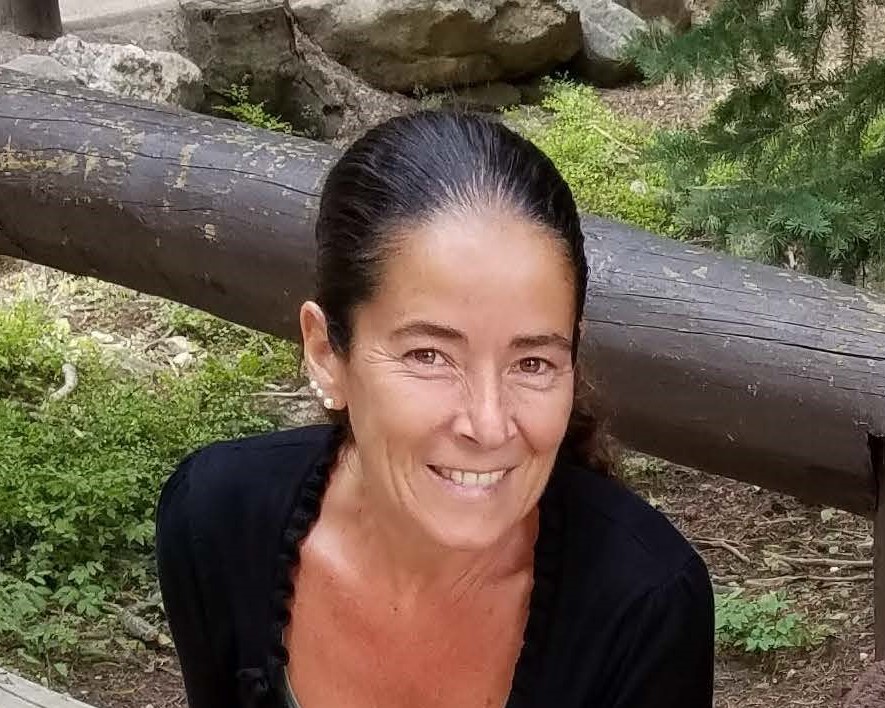 Professor Francesca Tataranni has studied Latin, Greek, and ancient history since she was fourteen, and - as is the case for many - fell in love with the Classics because of a great teacher. She hopes to inspire others through her own teaching by imparting a passion for studying the languages and cultures of ancient Greece and Rome to her students.
Tataranni has, in fact, been teaching at Northwestern for 23 years. When she was still a post-doc, the department needed someone to teach Latin and approached Tataranni, who was at the time primarily focused on her research on ethnicity in Italy before the conquest of the Romans. Despite her anxiety at the prospect of teaching in English, a language in which she was still building confidence at the time, Tataranni accepted. Teaching immediately suited her. Upon stepping into the classroom, she felt like she belonged there.
“When you feel like you can share what you love and what’s important about what you love,” that is what makes teaching so fulfilling to Tataranni, who values how teachers can make a difference in the way students examine their world. She loves the collaboration and growth that happens within a classroom - when students embrace what you give them and make it their own, when everyone works together to discuss and think about ancient issues that are still very relevant today. That deep engagement with both the material and each other is meaningful to Tataranni: “I feel something important is happening.”
In order for that collaboration to be possible, though, students need to feel comfortable speaking up, risking mistakes, and indeed making mistakes. Tataranni tries to cultivate a safe environment in her classrooms where people can make those mistakes that are necessary for learning. Part of why she advocates so strongly for the willingness to make mistakes is because Tataranni herself has learned over the course of her career that making mistakes and learning how to recover from them is where growth happens. From a simple observation and with the help of others, students in her classes learn to build arguments and counterarguments out loud. That learning sometimes requires and benefits from confronting differences, which she recognizes can be scary. Tataranni hopes that through her classes, students learn a passion for thinking, reading, attending to details, and a love for language, which is so crucial for communication. She wants students to internalize that by developing critical thinking and argumentative skills, they can engage actively with the world around them and effect meaningful change. Studying the past, she points out, allows us to reflect on contemporary issues with a distance that helps us process certain issues that are very complex and complicated. The distance, both temporal and geographic, makes sensitive topics less uncomfortable to examine without reducing their significance or the applicability of their discussion. She is certain that the Classics will always be a strong discipline in academia, and she hopes that its study will continue to be a place for positive change and motivating students to be part of that change for the better.
Teaching is a constant work in progress. It requires constant adaptation, especially during the pandemic and now during the rising ubiquity of AI. “Good teaching,” she says, “is a combination of knowing what you want to achieve, setting learning goals for your students, and knowing how to help the students achieve them. There is a constant change of what students are interested in, the questions that they ask, what’s relevant to them, the tools that they use.” While there are publications, workshops, and conferences that instructors can use to stay updated on pedagogical shifts, the emotional side of teaching, the ability to connect with students, respond to their challenges and anxieties, and meet them where they are, is also important. Tataranni cherishes teaching smaller classes where she exercises this skill best, which makes for more impactful classes. “The ability to inspire your students - that should always be the goal.”
Tataranni’s teaching work has influenced her research directions over the course of her career. A Roman historian by training, she wrote her dissertation on the Samnites, but her field of research shifted toward Latin literature and pedagogy once she took up teaching Latin, urged along by a lack of interest in pre-Roman Italy in the US. When brainstorming how to contribute to the Classicizing Chicago project spearheaded by the late Classics professor Kathryn Bosher, Tataranni considered how she dreamed of doing a walking tour with her students in Rome. This led her to develop the “Ancient Rome in Chicago” course: a study of Classical reception in Chicago architecture, complete with a class walking tour downtown and a virtual walking tour she developed with her students. The virtual tour, also titled Ancient Rome in Chicago, was nominated for the 2019 Digital Humanities Awards in the category Best Use of DH for Public Engagement and was featured twice in the University of Wisconsin-Madison’s Scout Report (Vol. 27, Nr. 29) as “a resource of great quality and merit. Northwestern University classics professor Dr. Francesca Tataranni brings a classical antiquity perspective to some of the city's iconic landmarks and lesser- known historical gems.” She has continued to research Classical reception, including developing a film essay, One Dark Wall, about a controversial mural in Lincoln Square’s Sulzer Library that depicts a scene from the Aeneid. She is currently working on the combination of Classical motifs and Native American motifs in Chicago Art Deco. This fall, however, after 23 years, Tataranni is very excited to teach a course on her favorite research topic, Italy before Rome!
Being a professor is a demanding job that requires commitment and sustained personal investment, but Tataranni says that her 20-year work experience at Northwestern has been a very rewarding journey, mostly because of the great mentors she had in the department. Mentorship - and good mentorship, at that - can be difficult to come by. Tataranni emphasizes that she was able to achieve everything she has done because she had very good mentors who advised, encouraged, and reassured her when needed. She intends to be that good mentor for junior faculty now. “One of the most important aspects [of the Classics department] is that it’s a community where people care for each other and understand that, to grow, you need inspiration and support.”
Thank you, Professor Tataranni, for 20 (or rather, 23!) years of teaching!
NB: Some quotes have been edited for clarity.